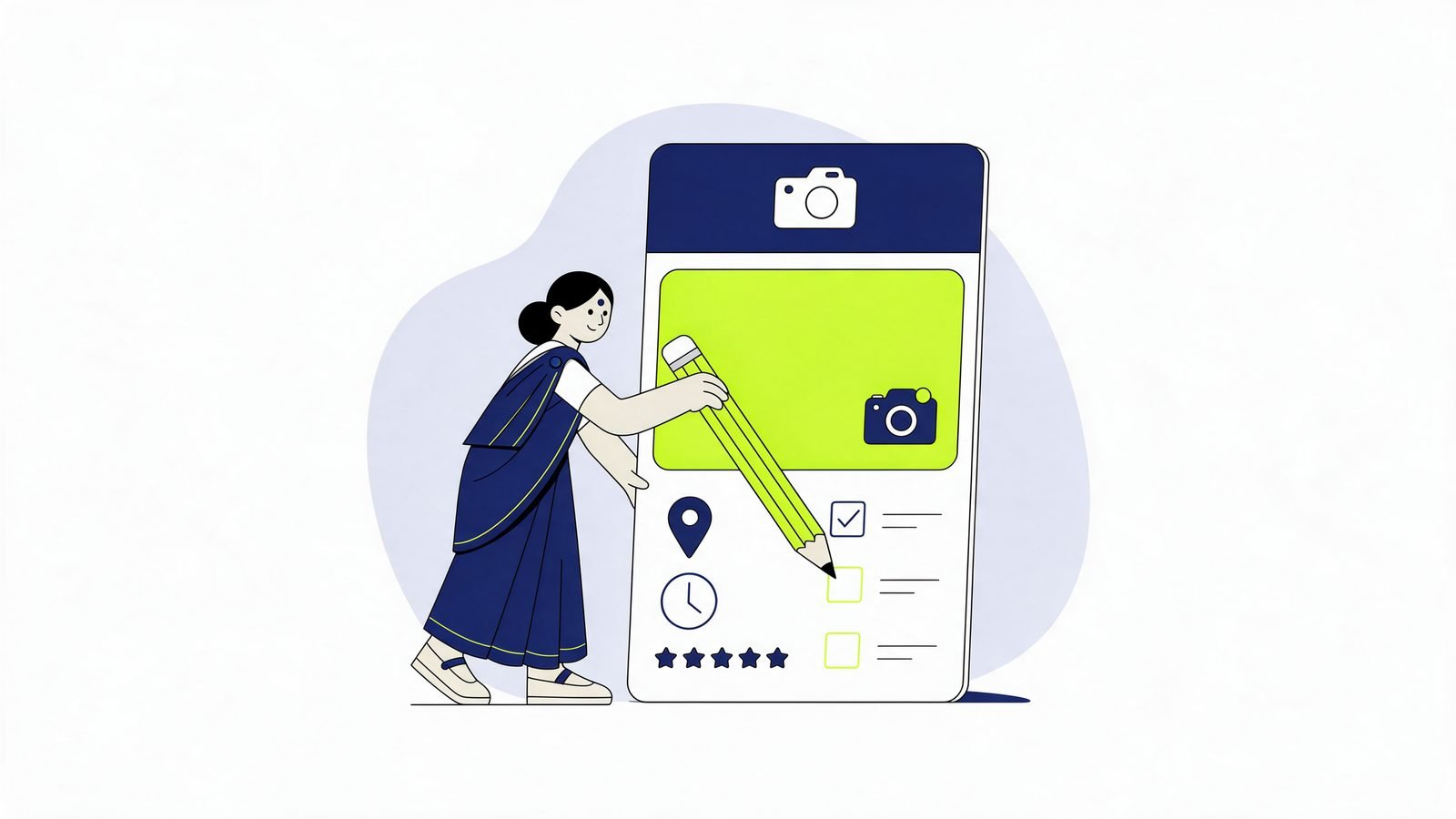
Why completeness pays
Google's own help pages put numbers on it. With a complete profile on Search and Maps, Google says customers are 2.7 times more likely to consider a business reputable, 70% more likely to visit, and 50% more likely to consider buying.
Customers say the same thing in independent research. BrightLocal asked 1,227 consumers in 2026 what they looked at while choosing a local business:
Source: BrightLocal, What makes consumers choose your business? (July 2026).
When asked for their top reasons in the final choice, "clear and complete information" came first, named by 32%. Almost everything on this list lives in your Business Profile.
1. Business name: exactly as on your signboard
Your profile name should match your real-world name, as it appears on your signage, letterhead and registration. Google does not allow taglines, phone numbers, locations or service keywords that are not part of that name.
- Right: "Shree Balaji Opticals"
- Wrong: "Shree Balaji Opticals | Best Eye Test & Spectacles Shop in Pali"
The temptation is real, because keywords in names correlate with higher rankings. But extra words can be removed if reported and, under Google's guidelines, can lead to suspension. Our suspension guide explains what happens next.
2. Categories: specific first, few in total
Your primary category is the single strongest factor in Whitespark's 2026 expert survey of local rankings. Choose the most specific category that describes your core business: "Pediatric dentist" rather than "Dentist" if that is what you are, "Saree store" rather than "Clothing store" if that is your main trade.
Then add a few secondary categories for other things you genuinely do. Google asks you to "use as few categories as possible" and not to use categories "solely as keywords". Look at the top three competitors for your main search to see which categories they use, then choose only what is true for you.
3. Address, map pin and service area
- If customers visit you, show your full address, matching your signage and documents, with the correct PIN code. Then check the map pin and drag it to your actual entrance.
- If you travel to customers (plumbers, cleaners, home tutors, caterers), hide your address and add the areas you serve. Google asks service-area businesses to hide their address.
- If you do both, show your address and add service areas.
Not allowed: P.O. boxes, mailboxes, and virtual offices that are not staffed during business hours.
4. Hours, special hours and festival dates
Hours climbed from 85th to 21st place in Whitespark's ranking survey between 2023 and 2026, and "open at the time of search" is a top-five factor. Wrong hours also cost you customers who arrive to a closed shutter.
Regular hours: set your normal opening times for every day, including lunch breaks if you close.
Special hours: set these in advance for festivals and holidays. On a computer, Google's steps are:
- Open your Business Profile and choose Edit profile.
- Go to Hours, then Special hours, and click the edit icon.
- Choose a suggested holiday or add a custom date.
- Enter your hours for that date, or keep Closed checked.
- Save.
A few rules from Google: special hours only show if your main hours are set to "Open with main hours"; use special hours for closures of up to six days in a row, and "temporarily closed" for longer; and hours past midnight must be split into two entries.
Preparing for the festive season? Our Diwali Google profile checklist covers this step by step.
5. Services and products: the most underused fields
"Keywords in GBP services" jumped from 110th to 35th in the 2026 expert survey, one of the biggest rises in the whole report. Most small businesses still leave this section half empty.
Services:
- Select every predefined service Google suggests that you actually offer.
- Add custom services in the words customers use: "Gold jewellery exchange", "Kids' eye test", "Same-day AC repair".
- Add a short description and a price or "from" price where you can.
Products (for shops and restaurants):
- Add your main product groups with a photo, a name, a short description and a price range.
- Retailers in eligible countries can also connect their stock, as Google's help pages describe.
These fields help Google match you to specific searches, and they give AI assistants concrete facts to repeat.
6. Photos and videos: real, recent and useful
Photos were one of the things consumers looked at in BrightLocal's research, and 16% had rejected a business because it had no photos.
Google's technical requirements are simple: JPG or PNG, between 10 KB and 5 MB, ideally 720 × 720 pixels or larger, in focus, well lit, and without heavy filters. Videos can be up to 30 seconds and 75 MB, at 720p or higher.
A useful starter set:
- Logo and a cover photo that shows your business at its best.
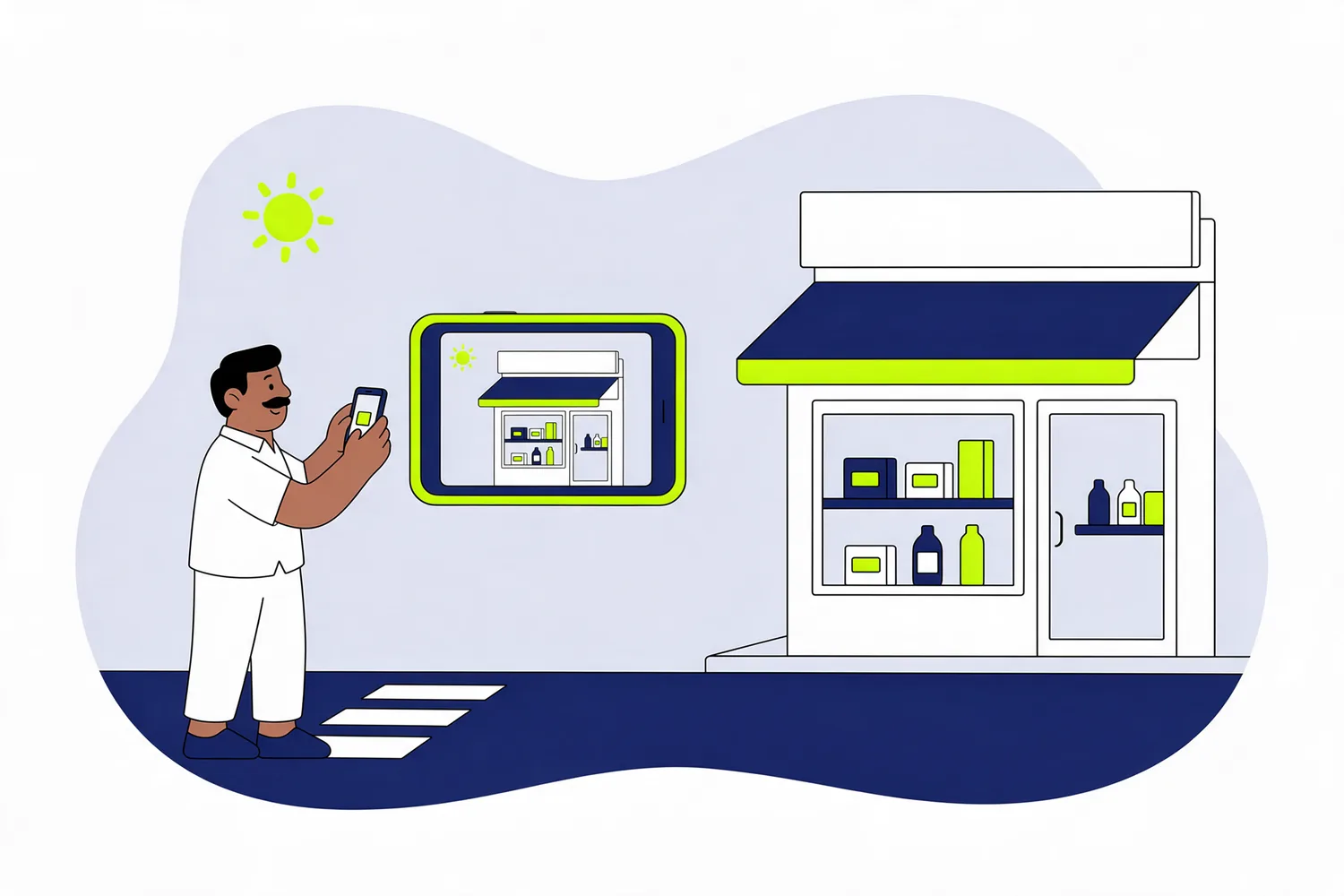
- Exterior from the street, in daylight, with the signboard readable, so people recognise you on arrival.
- Interior: the shop floor, waiting area or dining room.
- Your products or work: the actual pieces, dishes or finished jobs.
- Your team at work, with their permission.
Then add a few new photos every month. Google says new photos can take 24 to 48 hours to appear. Our free GMB ONE audit includes an AI-assisted review of your public photos that says what each one shows and which useful shots are missing.
7. Description, attributes and opening date
Description: Google asks for something "real, personal and engaging". In two or three short sentences, say what you do, for whom, where, and what makes you different. Do not paste a list of keywords or links.
Attributes: tick the details that are true, such as wheelchair accessibility, parking, payment options, women-led, appointment required or online services. These answer common questions before anyone calls.
Opening date: add the year you opened. It is a small, honest trust signal.
8. Reviews, posts and keeping it alive
A profile is not finished once it is filled in. In BrightLocal's 2026 decision research, 16% of consumers rejected a business because the listing looked abandoned or unclaimed, and 21% because its reviews were out of date.
A simple monthly routine keeps your profile active:
- Week 1: post an update, offer or event, with a real photo.
- Every week: ask customers for reviews and reply to every new one. See our Google reviews guide.
- Week 3: add three or four new photos.
- End of month: check hours, upcoming holidays, services and prices, and review any suggested edits from Google or the public.
Google has also been changing parts of the profile. The questions and answers feature has been scaled back since Google discontinued its Q&A API in November 2025, and new AI tools such as Ask Maps answer customer questions from your profile information and reviews. That makes accurate, complete fields even more important. Read more in how AI is changing local search.
Checklist questions, answered
How do I optimise my Google Business Profile for free?
Complete every field accurately: real business name, most specific primary category, correct address or service area, regular and special hours, services, products, photos, description and attributes. Then ask every customer for a review and reply to all reviews. None of this costs money.
How often should I update my Google Business Profile?
Check it monthly, add new photos and posts regularly, and update special hours before every holiday or festival. Reply to reviews within a day or two whenever they arrive.
What size should Google Business Profile photos be?
Google recommends 720 by 720 pixels, with a minimum of 250 by 250 pixels, as JPG or PNG files between 10 KB and 5 MB. Photos should be in focus, well lit and without heavy filters.
Does a complete profile really get more customers?
Google says customers are 70% more likely to visit and 50% more likely to consider purchasing from businesses with complete profiles, and 2.7 times more likely to consider them reputable.
How do I check what is missing on my profile?
Search your business name on Google and compare your profile with the top three competitors for your main service. Our free GMB ONE audit does this for you, checking eight areas and comparing your profile with three nearby businesses.
About the author
Praveen Kumar, Founder, Vectura Digital
Praveen Kumar is the founder of Vectura Digital, which builds SEARCH ONE, a website audit for SEO, AEO and GEO, and GMB ONE, a Google Business Profile audit. He works with local businesses in India on how search engines and AI assistants read and recommend them.
Sources
- Google Business Profile Help, Tips for a complete Business Profile
- Google Business Profile Help, Guidelines for representing your business on Google
- Google Business Profile Help, Set special hours
- Google Business Profile Help, Photo and video guidelines
- BrightLocal, What makes consumers choose your business? (July 2026)
- Whitespark, Local Search Ranking Factors 2026
- Search Engine Roundtable, Google Business API Q&A feature going away November 3 (September 2025)