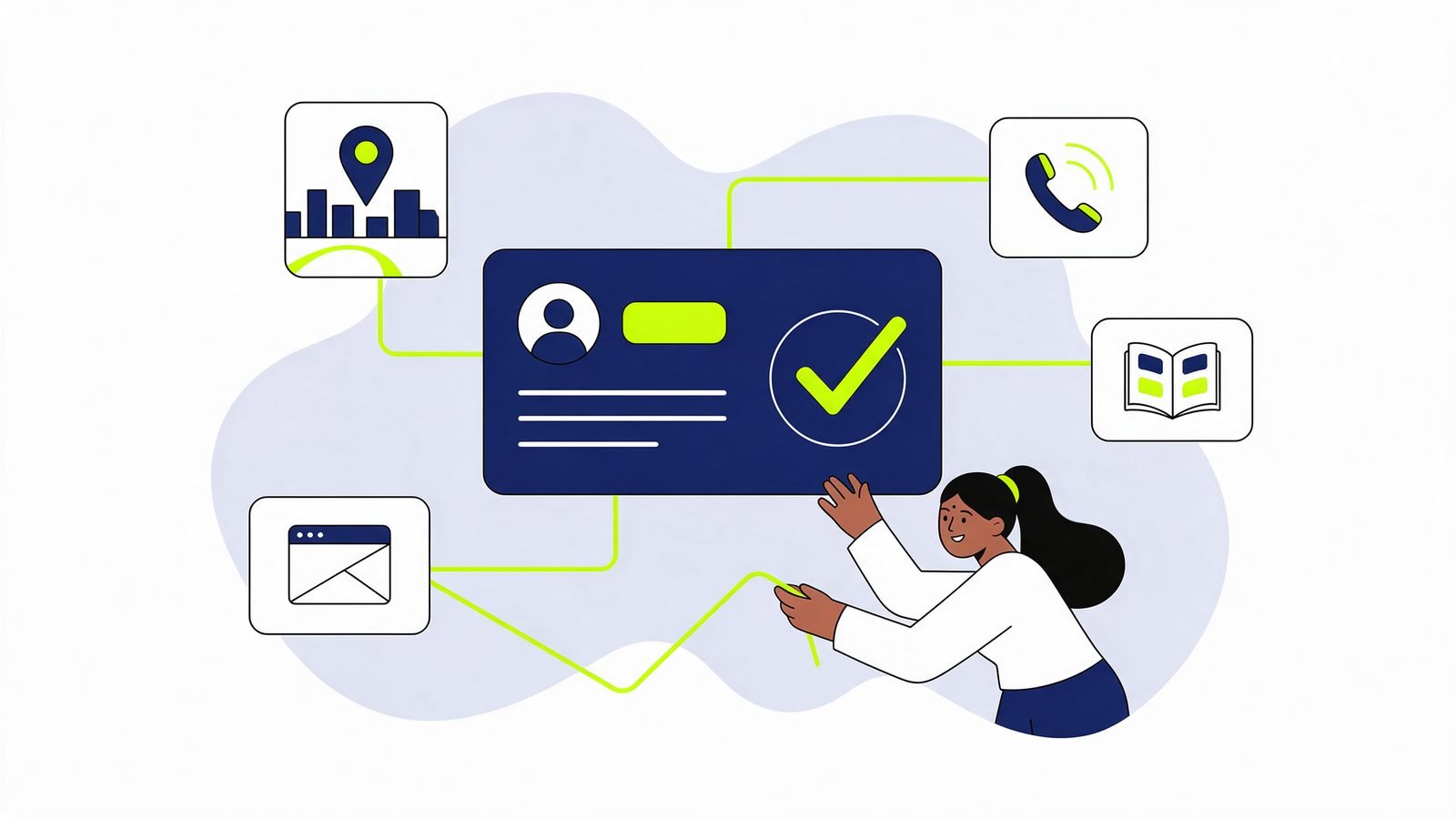
What is an "entity", and why should a shop owner care?
To a search engine, an entity is a thing it can identify uniquely: a person, a place, a company, a product. "Sharma Sweets, Lajpat Nagar, Delhi, opened 1987" is an entity. "sharma sweets" typed into a box is just words, and there may be two hundred of them across India.
Google has worked this way for over a decade through its Knowledge Graph, the database behind the information panels you see beside search results. AI assistants push it further. When someone asks ChatGPT or Gemini for "a good sweet shop near Lajpat Nagar", the assistant has to connect many scattered mentions, reviews and listings to the right business before it can recommend it.
If those mentions disagree, with three spellings, two phone numbers and an old address, the assistant has a choice: guess, or pick a competitor whose details line up. Often, it simply picks the competitor.
How AI assistants piece a business together
BrightLocal's study of local searches in ChatGPT shows how many different sources go into a single answer, and how the mix changes with the kind of question being asked.
800 local searches across 20 business types and 20 US cities, November 2024.
Source: BrightLocal, Uncovering ChatGPT Search Sources.
Two things follow. Your own website is the anchor, especially when someone is ready to buy. And for research-style questions, what other sites say about you carries real weight. In that study, Wikipedia alone made up 39% of the "mention" sources, which tells you how much assistants lean on well-known reference sites.
Whitespark's 2026 survey of local search experts found something similar for AI visibility: three of the top five factors were citation factors, meaning consistent business listings across the web.
Step 1: Decide your one true version
Before you change anything, write down the single official version of your business details. Everything else gets matched to this.
- Business name: exactly as on your signboard and registration. Pick one spelling and stick to it ("Sri" or "Shri", not both).
- Address: one format, with PIN code, building and landmark if customers use it.
- Phone: one main number, written the same way every time, ideally with +91.
- Website: one address, either with or without www, always on https.
- Hours: your regular hours.
- Category and services: the main thing you do, in the words customers use.
- Founding year, owner or lead professional: these help separate you from similarly named businesses.
Keep this in a note on your phone. You'll paste from it a lot.
Step 2: Make every listing match
Start with the places that matter most, then work outwards:
- Your website: footer, contact page and About page.
- Google Business Profile: name, address, phone, website, hours and categories. See our field-by-field checklist.
- Bing Places for Business: import from Google, then check the details.
- Apple Business Connect: many of your customers use iPhones and Apple Maps.
- The directories that matter in your trade: Justdial, IndiaMART, Sulekha, Practo, Zomato, Swiggy, Tripadvisor or your industry association.
- Social profiles: Instagram, Facebook, LinkedIn and YouTube bios.
While you're there, look for duplicates: two Google profiles, an old Justdial listing at a previous address. Ask the platform to merge or remove them. Duplicates make a business look unsure of itself online.
Step 3: Tell machines directly with Organization and LocalBusiness markup
Structured data is a small block of code on your website that states your facts in a format machines read reliably. Google's documentation on Organization structured data says it helps Google "disambiguate your organization in search results".
Google lists the useful properties, none of them strictly required:
- name, url, logo: the basics, with the logo at least 112 by 112 pixels.
- address and telephone: matching your one true version exactly.
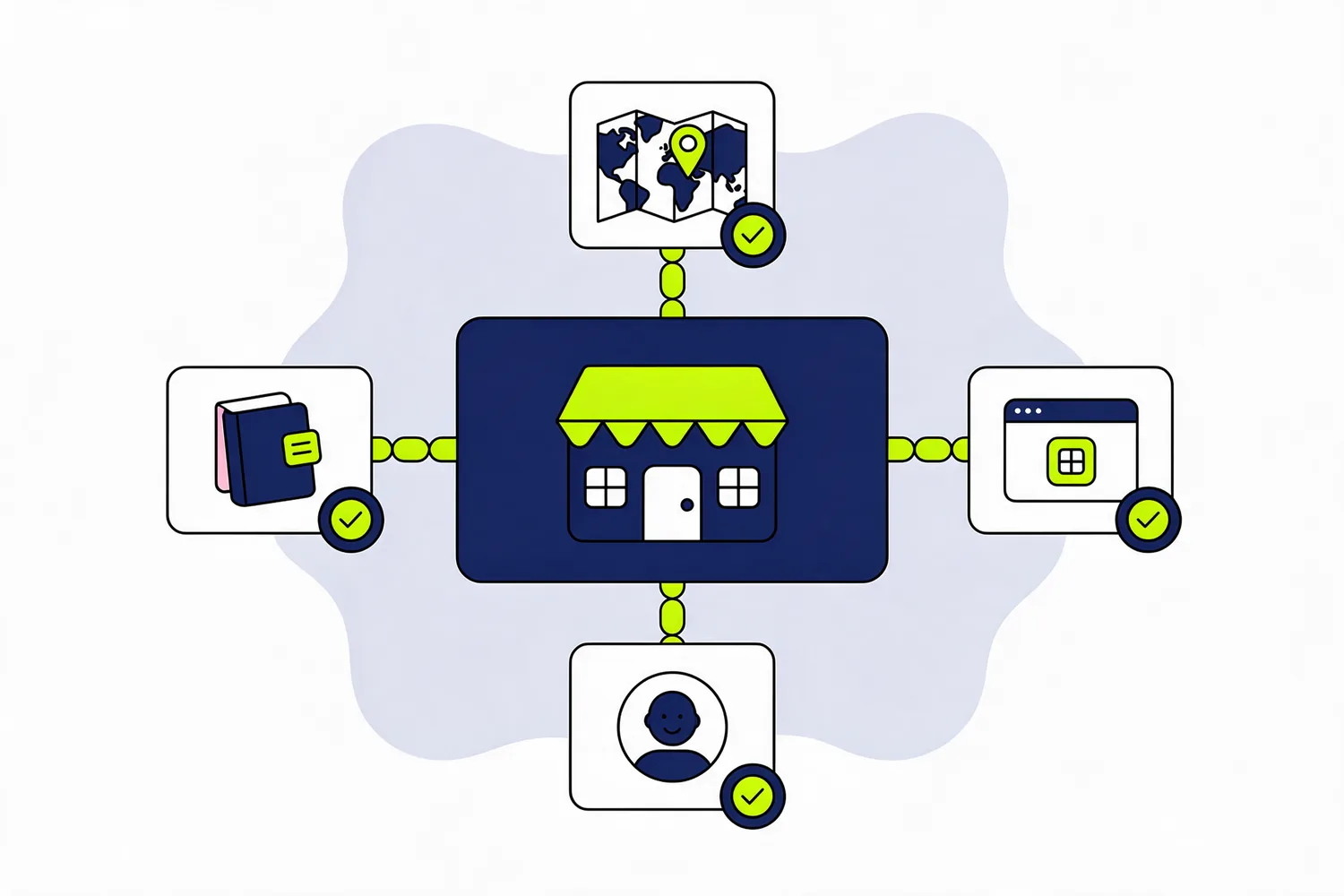
- sameAs: links to your other official profiles, such as your Google Maps listing, Instagram, LinkedIn and key directory pages. This is how you tell machines "these are all the same business".
- foundingDate, legalName and taxID: your registered name and, where applicable, your tax registration. For VAT-style IDs, Google says "This is an important trust signal for users."
Use the most specific type that fits, such as Dentist, JewelryStore or Restaurant rather than a generic Organization, and put it on your home page or About page. Then test it with Google's Rich Results Test.
The golden rule: the markup must match what visitors can see. Structured data confirms facts; it can't invent them.
Step 4: Earn mentions that confirm who you are
Listings say you exist. Mentions say you matter. Both help an AI feel confident.
Good, honest sources of mentions for a local business:
- A profile or quote in a local newspaper or city website.
- Your listing on a supplier's or brand's "where to buy" page.
- Membership pages of trade bodies, chambers of commerce or professional councils.
- Event pages for things you sponsor, host or speak at.
- Genuine answers in forums and community groups, signed with your business name.
Every one of these should use your one true name and link to your one true website. Consistency is what turns scattered mentions into a single, strong entity.
How to check whether AI knows who you are
Try these three tests every couple of months:
- Ask directly. In ChatGPT, Gemini and Perplexity, ask "What can you tell me about [your business name] in [your area]?" Check the address, phone, services and opening year. Note where any wrong detail came from.
- Search your exact name on Google. Do you see a single, complete Business Profile on the right or at the top? Two profiles, or none, is a problem to fix.
- Search your phone number. Every listing that shows up should have the same name and address. Old ones need updating.
Our free GMB ONE audit checks whether the phone number on your Google profile also appears on your linked website, one of the simplest consistency signals there is. For the bigger picture of AI recommendations, read how to get recommended by ChatGPT, Gemini and Perplexity.
Questions about entity SEO
What is entity SEO in simple words?
It is making sure search engines and AI assistants recognise your business as one clear, specific thing, with the same name, address, phone, website and services everywhere, linked to your official profiles. It helps them recommend you with confidence instead of guessing.
Does my small business need a Wikipedia page?
Usually not, and you should not create one about yourself. Wikipedia has strict notability rules. Focus on consistent listings, a strong website and genuine mentions in local news and trade sites, which are realistic for most businesses.
What is sameAs in schema markup?
sameAs is a property in Organization or LocalBusiness structured data that lists links to your other official profiles, such as your Google Maps listing and social media pages. It tells machines that all those pages describe the same business.
Should I add my GST number to my website?
If your business is registered, showing your GST number and registered name in the footer is a simple trust signal for customers, and Google's Organization markup guidance describes VAT-style tax IDs as an important trust signal for users.
How long does it take for AI to update my business details?
It depends on how often each source is recrawled. Updates to your website and Google profile can show in days or weeks; old directory data can linger for months, which is why fixing duplicates and outdated listings matters.
About the author
Praveen Kumar, Founder, Vectura Digital
Praveen Kumar is the founder of Vectura Digital, which builds SEARCH ONE, a website audit for SEO, AEO and GEO, and GMB ONE, a Google Business Profile audit. He works with local businesses in India on how search engines and AI assistants read and recommend them.